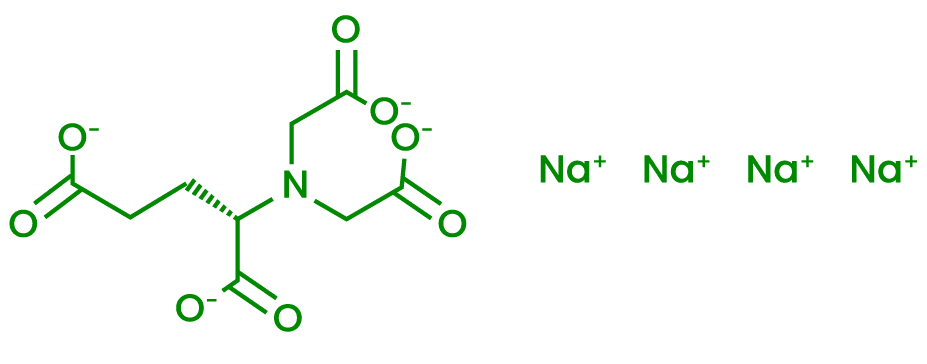
Tetrasodium Glutamate Diacetate (Commonly known as GLDA) is a high-purity, bio-based chelating agent derived from the fermentation of sustainable L-glutamic acid (an amino acid). This 47% aqueous solution serves as a high-performance, “green” alternative to synthetic chelators like EDTA and NTA. It is specifically engineered to sequester hard water ions and transition metals, ensuring formulation stability, clarity, and enhanced preservative efficacy across a vast pH spectrum.
Key Benefits and Performance
-
The “Green” EDTA Alternative: GLDA offers a superior environmental profile. It is readily biodegradable, non-toxic, and derived from renewable plant-based feedstocks, making it the primary choice for ECO-labeled household and personal care products.
-
High-Efficiency Chelation: It effectively binds polyvalent metal ions—specifically Calcium (Ca2+), Magnesium (Mg2+), and transition metals like Iron (Fe3+) and Copper (Cu2+). This prevents soap scum formation, mineral precipitation, and metal-catalyzed oxidation of oils and fragrances.
-
Preservation Booster: By sequestering the metal ions that microorganisms require for cell wall integrity and metabolic processes, GLDA acts as a powerful synergist for antimicrobial systems. It is particularly effective at helping organic acids pass challenge tests against Gram-negative bacteria.
-
Extreme pH Stability: Unlike many natural builders, GLDA remains highly soluble and chemically stable across an incredibly broad range, making it suitable for everything from acidic facial peels to highly alkaline industrial cleaners.
-
Clarity & Performance: It prevents the “clouding” of liquid soaps and detergents in hard water areas and boosts the primary surfactant’s cleaning power by removing interfering minerals.
Formulation Guidelines.
-
Booster: In personal care, it is often used at low levels to boost preservatives. In detergent applications, higher levels are used to manage water hardness.
-
Compatibility: Highly compatible with anionic, non-ionic, and amphoteric surfactants. Unlike EDTA, it has a lower risk of skin sensitization.